
Roof Inspection Cost in Miami: What You're Actually Paying For
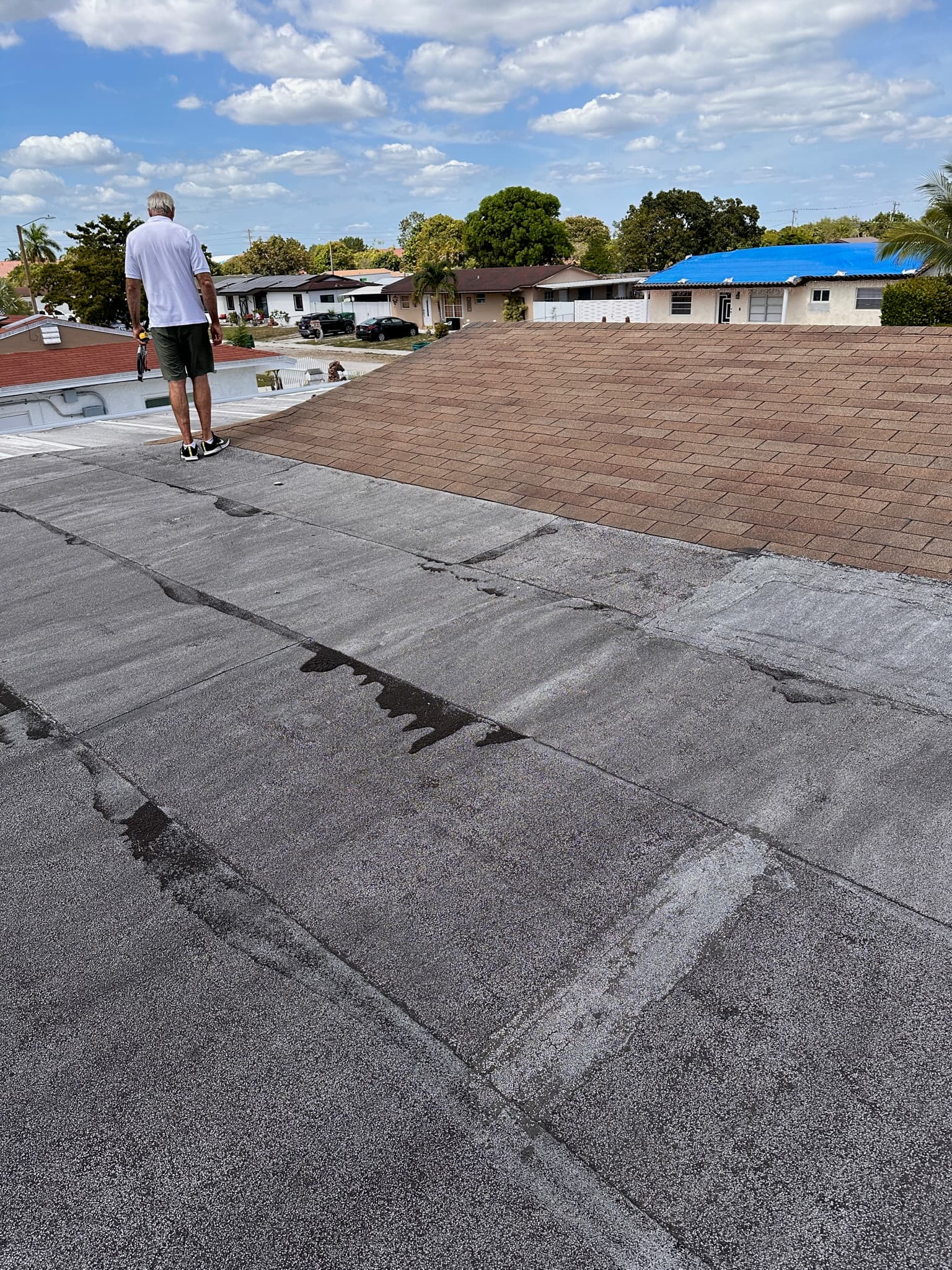
Most homeowners only think about a roof inspection after something already looks wrong — a stain on the ceiling, a missing shingle after a windy afternoon, a insurance letter that mentions "wind mitig
Overview
Most homeowners only think about a roof inspection after something already looks wrong — a stain on the ceiling, a missing shingle after a windy afternoon, a insurance letter that mentions "wind mitigation." By then, the inspection is reactive: you're paying to confirm a problem you already suspect, usually from a contractor who showed up because you called with a complaint.
There's a second kind of roof inspection, though, and it's the one that actually saves homeowners money: the proactive kind, done on a schedule, before anything is visibly wrong. In Miami-Dade, Broward, and Palm Beach, where roofs are worked harder by UV, heat, and wind-driven rain than almost anywhere else in the country, that distinction matters more than it does in most of the U.S.
What a roof inspection in Miami actually costs
A standalone residential roof inspection in the Miami area typically runs somewhere between $150 and $400, depending on roof size, pitch, and whether it includes extras like infrared moisture scanning or a written wind-mitigation report for your insurance company. A basic visual inspection — walking the roof, checking flashing, vents, and valleys, photographing problem areas — sits at the lower end. A full wind-mitigation inspection with the four-point form insurance carriers ask for costs more, because it requires a licensed inspector to complete state-specific paperwork that can actually lower your premium.
Here's the part most homeowners don't expect: many contractors, Roofweiler included, will inspect a roof for free if you're already getting a price for repair or replacement work. The paid inspection tier is mainly for homeowners who want a report with no obligation attached — for an insurance renewal, a pre-sale home inspection, or peace of mind after a storm passed nearby without direct damage.
What actually gets checked
A thorough inspection covers more than a glance from the driveway:
- • Shingle or tile condition — curling, cracking, granule loss, or slipped/broken tiles
- • Flashing — around chimneys, skylights, and roof-to-wall transitions, where the majority of leaks in South Florida homes actually start
- • Valleys and drainage — pooling water or debris buildup that accelerates wear
- • Attic ventilation — poor airflow cooks a roof from underneath and shortens its life regardless of the material on top
- • Soft or spongy deck areas — checked by walking the roof, since these often indicate moisture that's already gotten past the surface layer
- • Age-appropriate wear — a 12-year-old shingle roof and a 20-year-old shingle roof get evaluated against different baselines
If you're in a hurricane-prone stretch of coastline in Broward or Palm Beach, an inspector will also flag whether your roof-to-wall connections meet the newer High-Velocity Hurricane Zone (HVHZ) strapping standards, which matters both for storm performance and for insurance wind-mitigation credits.
Why an inspection isn't the same as an estimate — and why that's the problem
Here's where the traditional model breaks down for a lot of homeowners: an "inspection" from most roofing companies is really a sales visit with a clipboard. The inspector finds something (roofs always have something), and the visit ends with a pitch for a full replacement, a financing packet, and a "today only" price that's somehow always about to expire.
That's the exact dynamic we built Roofweiler's calculator to avoid. You don't need someone standing on your roof to give you a ballpark number — satellite imagery and your home's basic details can price a replacement in a few minutes, with no visit and no sales conversation attached. If the number makes sense and you want to move forward, a real, on-roof inspection happens as part of the actual project — not as a precondition for getting a price at all.
That's the sequence we'd recommend for most Miami, Fort Lauderdale, or West Palm Beach homeowners who suspect their roof might be nearing the end of its useful life:
- 1.
Get a ballpark price online first. No visit, no phone call, just your address and a few details.
- 2.
If the number is in a range you'd consider, then schedule the physical inspection — now it's confirming scope, not opening a sales conversation.
- 3.
Get the wind-mitigation paperwork done separately if it's for insurance, since that's a distinct deliverable from a repair/replacement estimate.
When you actually need a paid inspection (not just a price)
A calculator-first price is the right starting point for "is it time to replace this roof," but there are a few situations where a paid, documented inspection is worth it on its own:
- • Insurance wind-mitigation credits — the four-point/wind-mitigation forms carriers require have to come from a licensed inspection, not an online estimate.
- • Pre-purchase home inspections — if you're buying a home in Kendall, Pembroke Pines, or Boca Raton and the general inspector flags the roof, a roofing-specific follow-up gives you real negotiating leverage.
- • Post-storm documentation, even without visible damage — an inspection report timestamped right after a named storm is worth more to an insurance claim than one filed months later.
How often should you actually get one?
There's no single right answer, but material and age both push the calendar. A newer shingle roof under 10 years old in a well-ventilated attic can usually go two to three years between inspections without much risk of missing something important. Tile and metal roofs, which last considerably longer, still benefit from an inspection roughly every two years — not because the roofing material fails often, but because flashing, sealant, and fasteners age faster than the tile or panel itself and are the actual source of most leaks.
Once a roof passes the 15-year mark, regardless of material, annual inspections start to make more sense. This is also usually the point where insurance carriers start asking harder questions at renewal — which is its own reason to have current documentation on hand rather than scrambling for it after a non-renewal notice arrives.
Homes in coastal or flood-adjacent parts of Miami-Dade and Broward — think Sunny Isles Beach, Hallandale Beach, or low-lying stretches near the Intracoastal — see faster wear from salt air corrosion on metal fasteners and flashing, even when the roofing material itself is holding up fine. If you're in one of those zones, err toward the more frequent end regardless of roof age.
Reading an inspection report without a translator
Inspection reports tend to use language that's more useful to insurance underwriters than to the homeowner paying for the report. A few terms worth knowing before you're staring at one:
- • "Minor granule loss, consistent with age" — normal wear, not urgent, but worth tracking year over year.
- • "Active moisture intrusion" — this is the phrase that should get your attention. It means water is currently getting past the roofing system, not that it might someday.
- • "Deferred maintenance items" — small, cheap fixes (resealing a pipe boot, replacing a cracked tile) that are easy to ignore individually but compound into bigger problems if left for multiple inspection cycles.
- • "Non-compliant fastening" or "does not meet current HVHZ standard" — relevant mainly for wind-mitigation credits and older homes that haven't been re-roofed since building code updates; not necessarily an active problem, but worth pricing out.
If a report comes back heavy on "deferred maintenance" language rather than "active moisture intrusion," that's usually a signal you have time to plan rather than react — which is exactly the position you want to be in before getting quotes, not after.
Why this matters more in a tri-county market than it does elsewhere
Miami-Dade, Broward, and Palm Beach homeowners are dealing with a roofing market shaped by two things that don't show up together nearly as often in other parts of the country: intense year-round UV/heat exposure that ages roofing materials faster than the manufacturer's "expected lifespan" rating assumes, and an insurance market that has gotten meaningfully more aggressive about roof-age underwriting since 2023. A roof that would be a non-issue for a carrier in Georgia or the Carolinas can trigger a mandatory inspection requirement or a premium increase here well before it's actually failing.
That combination is exactly why a documented, current inspection is worth more to a South Florida homeowner than it is almost anywhere else — it's not just information about your roof, it's leverage in a renewal conversation with your insurer.
The bottom line
A roof inspection in South Florida should tell you two things: how much time you actually have left, and roughly what a fix or replacement will cost. You shouldn't need a sales visit to get either answer. Price your roof online first — no salesman required — and treat the physical inspection as the next step once you already know the number you're working with.