
South Florida Hurricane Roof Damage Cost Report (2026)
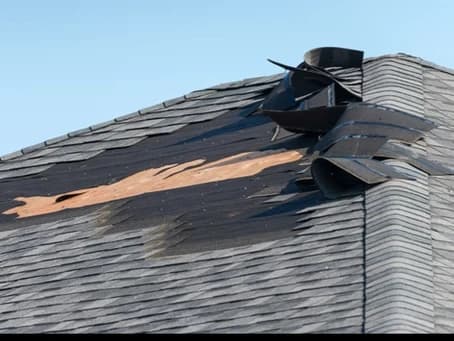
Every homeowner in Miami-Dade, Broward, and Palm Beach knows hurricanes are coming — most don't know what their specific roof costs to replace, how their hurricane deductible actually interacts with that number, or which testing standard their roof was even approved under. Run your own numbers below, then read what actually gets inspected after a storm — the code sections and test protocols a public adjuster or building inspector will reference, not generic advice.
Your hurricane roof math
Enter your county, roof material, and home value — this runs the same deductible-vs-replacement math a public adjuster would, using your numbers instead of a generic estimate.
Miami-Dade and Broward aren't under the same rules as the rest of Florida
Miami-Dade and Broward are the only two counties in Florida officially inside the HVHZ — High-Velocity Hurricane Zone. Roofs here are engineered for 165–195 mph design wind speeds depending on county and risk category (Broward's baseline is 170 mph, Miami-Dade's is 175, per FBC §1620.2), and every roofing product installed needs a Miami-Dade NOA (Notice of Acceptance) — a product-specific approval issued by Miami-Dade County itself, though the statewide Florida Product Approval system also has an HVHZ-rated path, so some HVHZ products qualify either way.
Palm Beach is a common source of confusion: it is not part of the HVHZ. All of Palm Beach County — not just its coastline — falls under Florida's Wind-Borne Debris Region instead, which requires impact-rated materials but approves products through the statewide Florida Product Approval system rather than a Miami-Dade NOA specifically. Two counties, same hurricane risk, genuinely different approval paperwork — a detail most cost estimates skip entirely.
The actual test protocols behind a roof's wind rating
A wind rating isn't a marketing number — it comes from specific Miami-Dade Test Application Standards (TAS), which are more demanding than the national ASTM tests used elsewhere in the U.S.:
- •TAS 100: Wind and wind-driven-rain resistance testing for discontinuous roof systems (shingles, tile).
- •TAS 101: Static uplift resistance testing specifically for mortar- or adhesive-set tile systems — relevant to any concrete or clay tile roof.
- •TAS 203-94: The cyclic-pressure component of Miami-Dade's protocol: after impact testing under a separate standard (TAS 201-94), products run through 9,000 cycles — 4,500 positive, 4,500 negative — to simulate sustained hurricane wind loading, not just a single gust.
In practice, this shows up as ring-shank nailing patterns, sealed roof decks, secondary water barriers, and enhanced edge-metal and flashing details — every one of them a real line item, not an upsell.
The deductible math nobody explains upfront
Florida hurricane deductibles aren't flat dollar amounts — they're 2%, 5%, or 10% of the home's insured value, and they apply separately from a homeowner's regular deductible. On a $400,000 insured home with a 5% hurricane deductible, that's $20,000 out of pocket before insurance pays a dollar. For a lot of roofs, that deductible alone exceeds the full replacement cost — run the calculator above with your real numbers to see where you land.
Average Florida homeowners insurance premiums run $3,240–$8,292/year depending on the source and region, with coastal South Florida property routinely landing at the high end ($5,830–$7,290+). Knowing your real replacement cost — not a generic estimate — is what turns that deductible math from abstract into a number you can actually plan around.
What actually determines post-storm cost
- •Roof age at time of the storm: Fastening degrades over time regardless of material — a 15-year-old roof and a 2-year-old roof of the identical material do not perform the same in a direct hit.
- •Whether the deck stayed dry: Surface damage (missing shingles/tiles) is a fraction of the cost of deck damage. Water intrusion behind the surface layer is what turns a repair into a full tear-off.
- •Code-mandated upgrades at replacement, per FBC 1511 and Existing Building Ch. 7: Florida Building Code Section 1511 (Existing Roofing) governs re-roofing materials and methods, and the separate FBC Existing Building volume, Chapter 7 Section 706, layers on roof-to-wall connection and secondary water barrier requirements for HVHZ/Wind-Borne Debris Region retrofits. A full replacement has to meet current code even if the original roof pre-dates it — a real, unavoidable cost most damage estimates leave out.
- •Tile attachment method, per RAS 118/119/120: For tile roofs specifically, these Roofing Application Standards govern how tiles are set (mortar/adhesive-set vs. mechanical fasteners) and are what a Miami-Dade NOA references directly — it's not just "tile," it's tile installed to a specific tested method.
- •Underlayment class, not just the visible material: Two roofs with identical shingles or tile can have very different storm performance depending on the underlayment class installed beneath them — this is invisible until damage happens.
Conclusion
The number that actually matters isn't a national average — it's your county's approval requirement, your material's tested attachment method, and your own deductible math. Roofweiler's roof calculator uses current South Florida field pricing if you want a cost specific to your actual roof — no salesperson required.
Related Articles
How to Prepare Your Home for Hurricane Season
Essential hurricane preparation tips for South Florida homeowners.

Tile vs. Metal vs. Shingle: 25-Year Cost in South Florida
A full cost-over-time comparison of the three main roofing materials.